
SPHERE Health Innovation Fellow to improve recovery after delirium
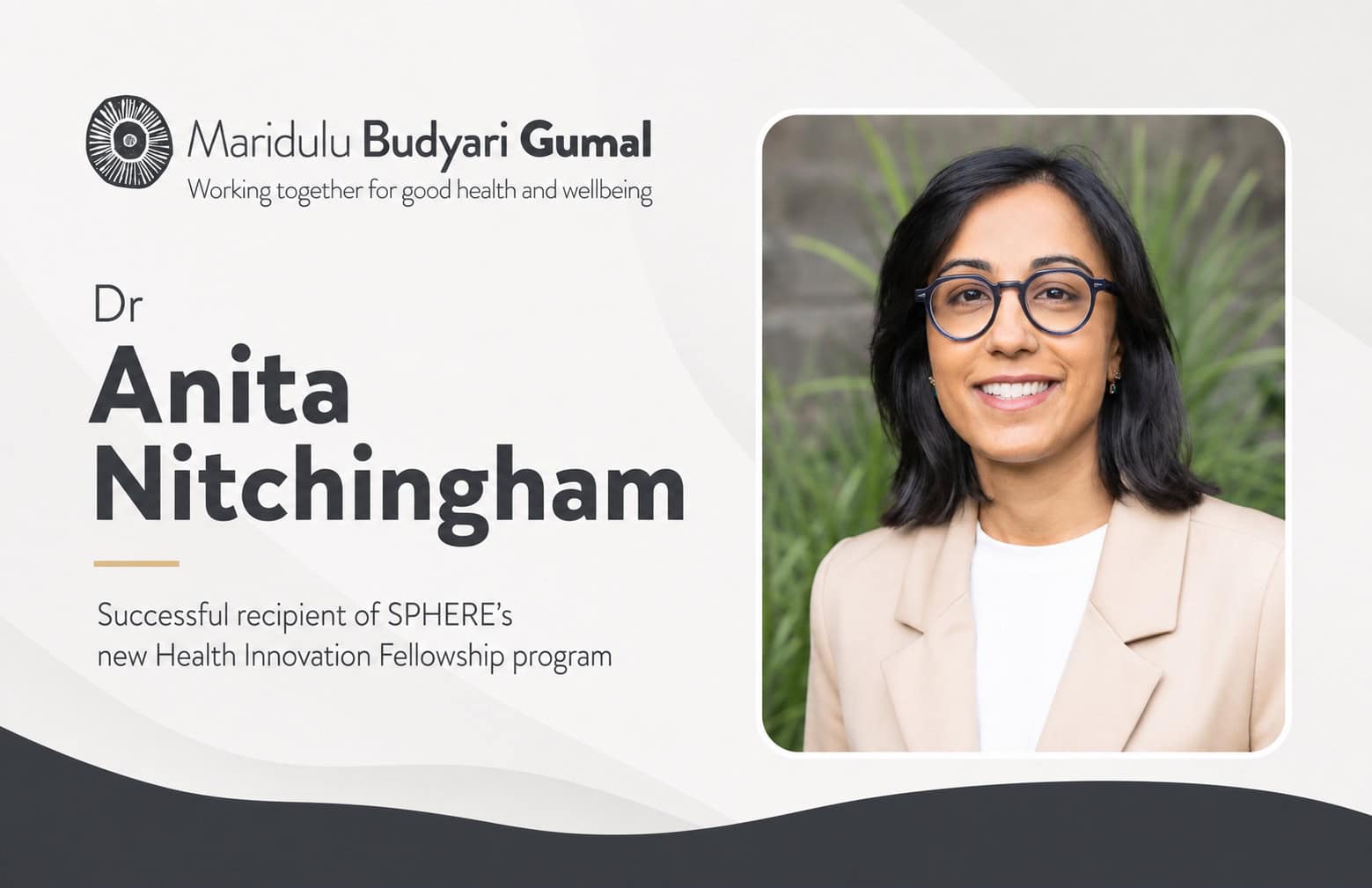
A project to improve support for older people recovering from delirium after leaving hospital has been awarded funding through SPHERE’s new Health Innovation Fellowship program.
Dr Anita Nitchingham is one of four successful recipients of the Fellowship, which supports early- to mid-career researchers to lead projects addressing major health system challenges.
Dr Nitchingham, a Geriatrician and Clinician Researcher based at Prince of Wales Hospital and UNSW Sydney, will lead the project The Missing Link: Implementing a tiered post-discharge pathway to enhance resilience and recovery after delirium.
The project will implement and evaluate a new post-discharge recovery pathway for older people who have experienced delirium in hospital. Known as Resilience and Recovery after Delirium, or R2D2, the pathway is designed to support patients and families after discharge and help reduce the risk of ongoing cognitive, functional and emotional decline.
Delirium is a sudden change in thinking and attention that can occur during illness, surgery or hospitalisation. It is common among older hospital patients and can have serious consequences, including accelerated cognitive decline, reduced independence, psychological distress, increased risk of dementia and higher mortality.
Despite its impact, there is currently no structured post-discharge pathway for patients recovering from delirium in Australian hospitals. This means many patients leave hospital without the same kind of coordinated follow-up that is routinely available for other serious conditions such as heart failure or chronic respiratory disease.
Dr Nitchingham said the Fellowship would support the development of a pathway that recognises recovery from delirium extends well beyond hospital discharge.
“We tend to think delirium resolves once someone leaves hospital. But for many patients and families, the impact lingers- in their thinking, function, and emotional wellbeing. This Fellowship enables us to design a recovery pathway that recognises those ongoing challenges and provides support during this critical period” Dr Nitchingham said.
“Delirium is also a strong risk factor for dementia, making the period after hospital discharge an important opportunity to support long-term brain health. By providing education, encouraging healthy lifestyle strategies, identifying ongoing cognitive concerns early and connecting patients and families with appropriate services, we can empower people to optimise their recovery and protect their future brain health.”
The need for this work is clear at Prince of Wales Hospital, where delirium is the leading principal diagnosis group within Geriatrics and is responsible for 20 per cent of unplanned readmissions. A local audit also found gaps in discharge documentation, GP communication and follow-up care for patients who had experienced delirium.
R2D2 aims to close this gap by creating a tiered model of support after hospital discharge. The pathway will include co-designed digital resources for patients and carers, structured virtual follow-up using existing telehealth systems, and multidisciplinary clinic review for patients who need additional support.
The project will be developed with patients, carers, clinicians and consumer partners to ensure the pathway is practical, accessible and responsive to the needs of older people and their families. It will initially be piloted at Prince of Wales Hospital across selected medical and surgical specialties, with the potential to expand to additional clinical areas.
The project will measure whether the pathway improves structured post-discharge follow-up, documentation, communication with GPs and patient experience. It will also assess outcomes including cognition, function, psychological wellbeing and quality of life.
Dr Nitchingham brings significant clinical and research experience to the Fellowship. Her research focuses on delirium and spans neuroimaging, clinical trials and health service development, with the goal of improving outcomes for older people experiencing delirium. She leads the delirium consult service at Prince of Wales Hospital and recently completed a PhD focused on cerebral glucose metabolism and intranasal insulin in delirium.
The Fellowship will support collaboration across several SPHERE partners, including South Eastern Sydney Local Health District, South Western Sydney Local Health District, St Vincent’s Health Network Sydney, UNSW Sydney, the University of Technology Sydney, The George Institute for Global Health and Neuroscience Research Australia.
By the end of the Fellowship, the project aims to deliver a co-designed, tested and scalable model for post-delirium recovery care. If successful, the R2D2 pathway could be embedded into routine clinical practice and adapted across other hospitals and health services.
Through this Fellowship, Dr Nitchingham hopes to create a practical model of care that supports older people and their families beyond hospital discharge, helping to improve recovery, strengthen continuity of care and protect against future decline.