
From research to practice
Want your research to actually change practice? Even better – want that change to last? Start by calling an implementation scientist.
That’s the message in a new paper just published in JBI Evidence Implementation Journal by 25 seasoned experts in implementation science brought together under the SPHERE Implementation Science Platform. Collectively, these researchers represent more than 173 years of experience in helping evidence-based programs, policies, and interventions take root in real-world health care systems.
“Too often, brilliant research stops at publication,” says Associate Professor Natalie Taylor, Lead of the SPHERE Implementation Science Collaborative.
“If we want to make a lasting difference on the ground, we need to think about implementation from day one, and that means involving implementation scientists early.”
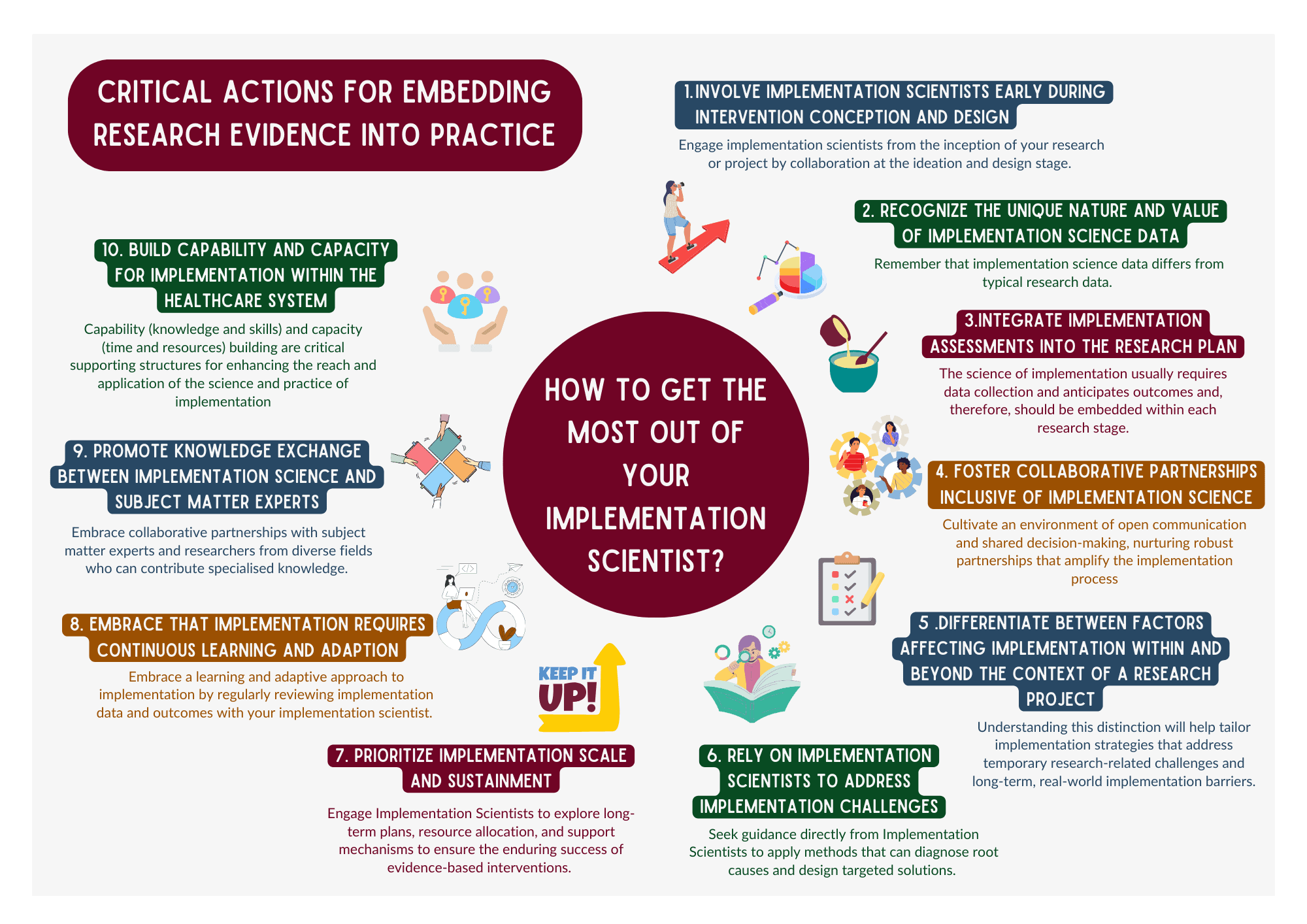
The article outlines ten practical recommendations for researchers, clinicians, and health service leaders looking to collaborate effectively with implementation scientists. These include building genuine partnerships, recognising the unique value of implementation data, embedding implementation thinking into research design, and staying focused on scale, sustainability, and systems-level learning.
“Implementation science is not a bolt-on,” says A/Prof Taylor. “It’s the engine that drives evidence into practice. We help uncover the invisible barriers, understand how change really happens in complex systems, and support people to adapt and learn as they go.”
The paper responds to a common challenge: many health stakeholders know they need implementation support but aren’t sure how to engage with implementation scientists or what they actually do.
“As implementation practitioners, we're here to help your evidence-based initiative take root—efficiently, appropriately, and with real-world impact. But as implementation researchers, we also have a responsibility to advance the science: by studying what works, why, for whom, in which contexts, and at what cost. This research is crucial—not just for success in one setting, but to ensure that interventions can be sustained, scaled, and adapted across diverse environments.”
According to A/Prof Taylor, that uncertainty can be costly.
“Delaying or sidelining implementation planning often leads to wasted time, wasted resources, and interventions that never get off the ground.”
The ten actions recommended in the paper include:
- involve implementation scientists early during intervention design,
- recognise the unique nature and value of implementation science data,
- integrate implementation assessments into the research plan,
- foster collaborative partnerships inclusive of implementation science,
- differentiate between factors affecting implementation and wider constraints,
- work with implementation scientists to address implementation challenges,
- prioritise implementation scale and sustainment,
- embrace that implementation requires continuous learning and adaptation,
- promote knowledge exchange between implementation science and subject matter experts,
- focus on capability- and capacity-building for implementation within the system.
“These aren’t just nice-to-haves. They’re essential ingredients for translating research into lasting impact”. says A/Prof Taylor.
“We are starting with an average of 17 years to get evidence into practice. The more we can learn from combined implementation practice and research efforts, the shorter this bench to bedside gap will become.”
The publication is part of SPHERE’s broader mission to strengthen implementation science capacity across health and research sectors. It highlights the growing recognition that rigorous research alone is not enough, translating that evidence into action requires just as much expertise, planning, and collaboration.
The full paper is available now in JBI Evidence Implementation Journal.